
Early years
Play based learning
Learning through play is a term used in education and psychology to describe how a child can learn to make sense of the world around them. Through play, children can:
- develop social and cognitive skills
- mature emotionally
- gain self-confidence to engage in new experiences and environments.
Our Junior Primary classes engage in both structured and unstructured play at various times of the day. Some sessions are student-led, while others are supported by teachers. Our focus is to:
- spark children’s natural curiosity
- encourage engagement based on their interests, strengths, and developing skills.
Playing benefits children by:
- supporting brain development
- enhancing language and communication skills
- promoting problem-solving abilities.
Sessions may include children across different age groups within the JP year levels. Play can occur:
- indoors or outdoors
- using equipment or through imaginative play.
Nature Play
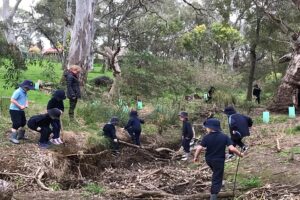
Current research clearly shows that natural environments and outdoor play are very good for children in many ways. Playing outside helps children:
- be more creative
- use their imagination and understand symbols
- solve problems and think better
- develop physically by improving skills like running, jumping, and coordination
- prevent obesity by staying active.
Playing in nature also stimulates all the senses. Children can see, hear, touch, and smell the environment around them. Physical activity is known to be good for children’s health and development. Research shows that children who find it hard to concentrate often focus better after playing outdoors. Natural environments also give teachers chances to teach children about caring for the earth. Watching plants grow and change through the year helps children learn about nature.
Play is a key part of early childhood learning. It is a child-focused way of teaching that includes all areas of learning, especially reading, writing, and math. At the Hub Primary School, all junior primary classrooms use play in their teaching. Through play, children can:
- experiment and explore
- solve problems and make choices about their learning
- use their imagination and be creative
- work with friends in groups
- use different materials and tools.
Play also gives children plenty of time to talk and interact with others, which is very important for their learning and social skills.
Buddy classes
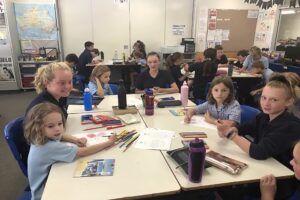
At the start of each year, classes from Reception to Year 3 are paired with classes from the middle and upper primary grades. The goal is to match students based on their interests, learning styles, and personalities. Throughout the year, these buddy classes:
- Work and learn together in different activities, like reading and writing (literacy)
- Try cooking, using technology, dancing, and acting (drama)
- Share lunch, go on picnics, and go on trips (excursions)
This helps build a friendly and welcoming school community. Most junior primary students look up to their buddies when they are in the playground or if they need help with friendship issues or managing social situations.
Literacy intervention session
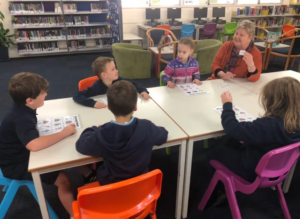
This is a special, structured program that uses different senses to help students improve their reading and writing skills. It is for Year 1 and 2 students who are having a hard time reaching the expected level in literacy.
The program is planned with input from the classroom teacher, support staff, and school leaders to make sure it meets each student’s needs. Students get small group lessons 2 to 3 times a week for about 10 to 12 weeks. The program includes regular reviews to check progress.
Benefits of the program include:
- Building confidence and self-esteem
- Improving skills in phonological awareness (sounds in words)
- Practicing handwriting and reading
- Understanding and making sense of what they read (comprehension)
- Developing writing skills
Events
JP Sing
Every week, Junior Primary classes spend half an hour singing, moving, dancing, and playing games. Students enjoy being part of a big group and learn about good manners when performing and listening. They start to learn how to sing together, perform in front of others, and understand basic choir skills. Students get a chance to show what they’ve learned to their classmates and perform at school assemblies during the year.
JP Significant Day Celebrations
All Junior Primary classes come together to celebrate important days on the school calendar.
These celebrations include:
- Harmony Day
- International Mud Day
- Healthy Food Day
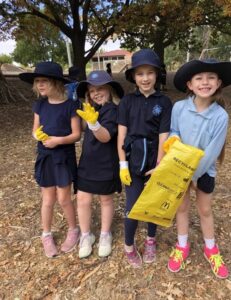
- Cleanup Australia Day
- School Assemblies
- National Simultaneous Story Day
- R-2 Family Picnics (Term 4)
- Christmas Craft activities
Reception transition visits
Families are supported as they prepare their children to commence schooling with confidence and enthusiasm. Our transition program allows children to adjust gently prior to beginning school at the Hub Primary. Our program includes one 1 1/2 hour session, one 1/2 day session and then 1 3/4 day session over a three-week period.
The transition to school program may include:
- regular visits to the school over a period of weeks
- walks around the school grounds to find out where things are, for example the toilets and playground
- spending time in a classroom with a teacher and other students
- going to school events such as assembly, library visits, or performances
- opportunities to develop relationships with other children and teachers.
- reverse transition when the teachers visit the kindy students at their setting.